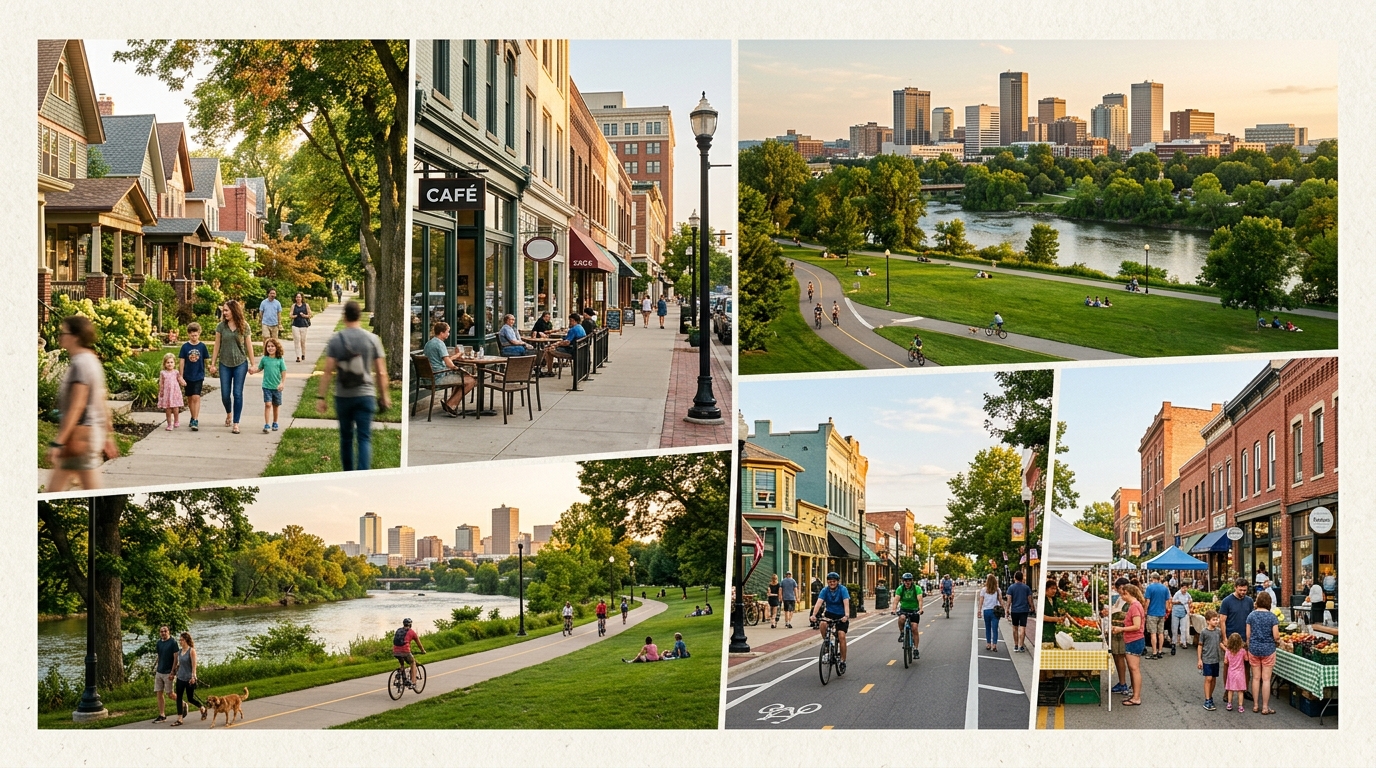
Finding affordable U.S. cities with high quality of life has become one of the smartest searches for people who no longer want to sacrifice their entire income just to live in a famous zip code. For years, many people believed that the best opportunities in the United States were concentrated in the largest and most expensive cities. New York, Los Angeles, San Francisco, Boston, Seattle, Miami, and Washington, D.C. often dominated the conversation. They had the biggest names, the strongest cultural image, and the kind of visibility that made people assume success had to happen there.
But the way people think about where to live is changing.
More workers are remote. More families are comparing lifestyle instead of only salary. More professionals are questioning whether a prestigious city is worth the rent, traffic, stress, and daily pressure. More people are realizing that quality of life is not only about living somewhere famous. It is about what your normal Tuesday feels like.
Can you afford your rent without panic?
Can you work without constant noise and stress?
Can you find a park nearby?
Can you go grocery shopping without losing half your day?
Can your children grow up somewhere safe and practical?
Can you build savings while still enjoying life?
Can you live in a place that supports your real routine instead of exhausting it?
That is why mid-sized and more balanced American cities are getting more attention. They may not always have the glamour of the biggest metropolitan areas, but many offer something that has become even more valuable: livability.
This article is not about the cheapest places in America. Cheap does not always mean good. A city can have low rent but weak infrastructure, limited healthcare, few opportunities, poor connectivity, or a lifestyle that does not fit your goals.
Instead, this article is about balance.
The cities below stand out because they may offer a more realistic combination of cost, quality of life, infrastructure, lifestyle, and opportunity. They can be especially interesting for remote workers, digital professionals, families, and people who want a smarter way to live in the United States without paying the extreme price of the most expensive urban centers.
No city is perfect. Every place has trade-offs. But some cities deserve more attention because they show that a good life in America does not always require the highest rent, the largest skyline, or the most famous address.
Why More People Are Looking Beyond Expensive U.S. Cities
For a long time, moving to a major city felt like the obvious path.
If you wanted better jobs, you moved to a major hub. If you wanted culture, you moved to a major hub. If you wanted networking, you moved to a major hub. If you wanted opportunity, you accepted the higher cost because that was part of the deal.
But that deal no longer works for everyone.
High rent can erase a higher salary. Long commutes can destroy personal time. Expensive childcare can pressure families. Competitive housing markets can make long-term stability difficult. Even people with decent incomes can feel financially stuck when they live in cities where every basic expense is inflated.
Remote work changed this calculation.
Once a person can earn money online or work for a company without commuting to an office every day, the city becomes a choice again. The question is no longer only, “Where is my job located?” The question becomes, “Where can my life work better?”
That shift is powerful.
A remote worker may prefer a quieter city with lower housing costs and better access to nature. A family may prefer a place with good schools, parks, and less daily stress. A digital professional may want reliable internet, coworking spaces, cafés, airports, and a lifestyle that does not consume every dollar.
This does not mean everyone should leave major cities. Large cities still offer incredible opportunities, culture, diversity, and career networks. But they are no longer the only serious option.
For many people, the smarter move is not chasing the biggest city. It is finding the right city.
What Makes a U.S. City Affordable and Livable?
Affordability alone is not enough.
A city should not be judged only by rent. True affordability includes the full cost of daily life: housing, utilities, groceries, transportation, healthcare, insurance, taxes, childcare, entertainment, and the amount of money left after basic expenses.
A livable city should also support a better rhythm of life. That includes clean neighborhoods, access to parks, reasonable commute times, good internet, healthcare, schools, safe public areas, local culture, and enough services to make life convenient.
For remote workers, the city also needs to support productivity. Reliable internet, comfortable housing, quiet neighborhoods, coworking spaces, libraries, cafés, and airports can make a big difference.
For families, the priorities may include schools, pediatric care, sports activities, parks, safety, and a community atmosphere.
For people rebuilding their financial life, the most important factor may be whether the city allows them to save money, pay debt, invest, or reduce stress.
The best cities are not always the ones that win every ranking. They are the ones that match a person’s real needs.
That is why the following list focuses on balance rather than hype.
1. Raleigh, North Carolina
Raleigh has become one of the most interesting cities in the United States for people looking for a mix of opportunity, comfort, and quality of life.
It is part of North Carolina’s Research Triangle region, an area known for universities, technology, healthcare, research, and professional opportunities. This gives Raleigh a strong economic base without making it feel as overwhelming as some larger metropolitan areas.
For remote workers and digital professionals, Raleigh can be attractive because it offers a modern lifestyle, good services, and a growing professional environment. It has enough energy to feel active, but it is not as intense as places like New York, San Francisco, or Los Angeles.
The city also appeals to families. There are residential neighborhoods, parks, schools, restaurants, and cultural activities. It offers a sense of structure that many people want when they are no longer tied to a specific office location.
Raleigh is not as cheap as it used to be. Like many desirable cities, it has become more expensive as more people discover it. But compared with major coastal hubs, it can still feel more balanced.
The main appeal is not that Raleigh is the cheapest place to live. It is that the city can offer a strong combination of jobs, education, lifestyle, and relative affordability.
For someone who wants a serious city without the highest cost of America’s biggest metros, Raleigh deserves attention.
2. Huntsville, Alabama
Huntsville is one of those cities that surprises people who have not studied it carefully.
It does not always appear in lifestyle conversations, but it has become a strong option for people who want opportunity, stability, and a more affordable cost structure.
The city is known for aerospace, engineering, defense, and technology-related industries. That background gives Huntsville a more sophisticated economy than many outsiders might expect. It is not just a quiet Southern city. It has a strong technical and professional identity.
For remote workers, Huntsville can be appealing because it offers breathing room. Housing can be more accessible than in many larger job markets, and the pace of life may feel more manageable. Families may appreciate the combination of services, neighborhoods, and lower pressure compared with major metropolitan areas.
Huntsville is also a good example of a city where quality of life is not always about glamour. It is about practicality. Can you live well? Can your income stretch further? Can you build a routine that feels stable? Can you access services without the constant stress of a huge city?
For many people, the answer may be yes.
Of course, Huntsville will not fit everyone. People who want a dense, walkable, big-city lifestyle may prefer other places. But for those who value affordability, stability, and a growing economy, Huntsville is one of the most interesting cities to consider.
3. Madison, Wisconsin
Madison offers a different kind of quality of life.
It is not a flashy city in the traditional sense, but it has a strong identity built around education, community, outdoor life, and livability.
Home to a major university, Madison has an intellectual and cultural energy that makes it feel more dynamic than many cities of similar size. It also has lakes, parks, bike paths, and a strong sense of local community.
For remote workers, Madison can be especially appealing if they want a city that feels thoughtful and grounded. It offers cafés, libraries, green spaces, and neighborhoods where daily life can feel calmer and more connected.
For families, Madison may offer many of the things that matter in real life: education, outdoor activities, community events, and a more stable rhythm.
The biggest challenge is the weather. Winters can be long and cold, and that can be a serious factor for people who prefer warmer climates. But for those who do not mind seasonal living, Madison can offer a high quality of life without the extreme cost of larger coastal cities.
Madison is a reminder that livability is not always loud. Sometimes it shows up in quieter ways: cleaner routines, better public spaces, good schools, bikeable streets, and a city that feels human-sized.
4. Pittsburgh, Pennsylvania
Pittsburgh has changed dramatically over the years.
Once known mainly for its industrial past, the city has evolved into a place with strong healthcare, education, technology, research, and cultural sectors. It has character, history, neighborhoods with personality, and a cost profile that can be more realistic than many other cities in the Northeast.
For people who still want a real urban environment, Pittsburgh can be a smart option. It has museums, universities, hospitals, sports, restaurants, and distinct neighborhoods. But it often avoids the extreme housing costs associated with places like New York, Boston, or Washington, D.C.
Remote workers may appreciate the fact that Pittsburgh offers city infrastructure without requiring the same financial sacrifice as larger East Coast hubs. It can feel substantial without feeling impossible.
Families may also find value in the city’s neighborhoods and surrounding suburbs, depending on their priorities and budget.
The city is not perfect. Weather, infrastructure age, neighborhood differences, and local economic variation all matter. But Pittsburgh has depth. It is not a generic place. It has identity, history, and a sense of reinvention.
For people who want urban life with more financial breathing room, Pittsburgh is one of the strongest names on this list.
5. Greenville, South Carolina
Greenville has become one of the Southeast’s most attractive smaller cities.
It has a charming downtown, a growing economy, access to nature, and a lifestyle that often feels more relaxed than what people experience in larger metropolitan areas.
One of Greenville’s biggest strengths is atmosphere. Some cities look good in statistics but feel cold in real life. Greenville often feels inviting. Its downtown, local restaurants, walkable areas, and nearby outdoor access create a pleasant everyday experience.
For remote workers, Greenville can be a good fit because it offers enough city life without becoming overwhelming. It can provide cafés, local business energy, community events, and a calmer environment for work and life.
For families, the city may offer a more manageable pace, with residential areas and access to parks and activities. It can also appeal to people leaving larger cities who want a softer landing rather than a dramatic move to a very small town.
Greenville has become more popular, which means affordability can vary by neighborhood. But compared with many major metros, it still has a reputation for offering a strong lifestyle value.
It is a city for people who want beauty, practicality, and a sense of place without needing to live in a giant urban center.
6. Chattanooga, Tennessee
Chattanooga has earned attention as a city that works well for remote workers, outdoor lovers, and people who want a better balance between lifestyle and cost.
The city is surrounded by natural beauty, including mountains, rivers, and outdoor recreation. It has also built a reputation for strong internet infrastructure, which matters for people who work online.
For digital professionals, this combination can be powerful. A person can work remotely during the week and still have access to hiking, biking, climbing, parks, and scenic areas without living in an extremely expensive outdoor city.
Chattanooga also has a more creative and independent feel than many people expect. It is not only a quiet city. It has a growing local scene, restaurants, small businesses, and an identity that appeals to people who want something different from the standard big-city lifestyle.
The city is not without challenges. Some areas are more desirable than others, and costs can rise as more people move in. Job opportunities may depend heavily on your field, especially if you are not working remotely.
But for remote workers who already have income and want a livable, scenic, and relatively manageable city, Chattanooga is one of the most compelling options in the United States.
7. Des Moines, Iowa
Des Moines is not usually the city people put on dream boards, but that is exactly why it can be underrated.
It offers practical advantages that become more important when people think seriously about long-term quality of life. Housing can be more accessible than in many larger markets. Daily life can feel less chaotic. The city offers services, business activity, and a more stable environment than many people assume.
For remote workers, Des Moines may be appealing because it can reduce financial pressure. If you earn online or work for a company remotely, living in a lower-cost city can help you save more, invest more, or simply breathe more.
For families, Des Moines can offer a calmer rhythm, family-friendly neighborhoods, and a practical lifestyle. It may not offer the glamour of coastal cities, but glamour does not pay the bills or reduce stress.
This is the kind of city that makes more sense when you look at real life instead of social media.
Can you afford a better home?
Can you avoid extreme traffic?
Can you build a stable routine?
Can you keep more of your income?
For many people, Des Moines may offer exactly that.
It is not the most exciting city on paper, but it may be one of the most sensible.
8. Omaha, Nebraska
Omaha is another city that often gets underestimated.
It has a strong business base, practical neighborhoods, decent infrastructure, and a cost of living that can be more manageable than many larger cities. It is large enough to offer services and opportunity, but not so large that daily life becomes overwhelming.
For people who want a stable place to live, Omaha can be surprisingly appealing. It has a family-friendly reputation, good local amenities, and enough economic activity to feel secure.
Remote workers may appreciate Omaha because it offers a lower-pressure environment while still providing city conveniences. If your income does not depend on living in a specific high-cost market, a city like Omaha can make your financial life easier.
The city may not be the right choice for someone looking for a highly glamorous or coastal lifestyle. But not everyone wants that. Many people simply want a city that works.
Omaha is practical. And practical can be powerful.
A city does not need to be trendy to support a good life. Sometimes the best move is choosing a place where you can actually build stability.
9. Tucson, Arizona
Tucson offers a completely different lifestyle from many cities on this list.
It has desert landscapes, warm weather, cultural character, and a strong sense of place. It is not generic. It feels distinct, and that can be a major advantage for people who want more than just affordability.
Compared with some other Western and Southwestern cities, Tucson may offer a more accessible cost profile while still giving residents sunshine, scenery, outdoor activities, and a lifestyle that feels less conventional.
For remote workers, Tucson can be appealing because it offers visual beauty and a slower rhythm. If you work online, the environment around you matters. A city with mountains, desert light, food culture, and local identity can make daily life feel richer.
The obvious challenge is heat. Tucson summers can be intense, and that is not something to ignore. Anyone considering a move should think carefully about climate, energy costs, transportation, and lifestyle during the hottest months.
But for people who love dry weather, desert scenery, and a more relaxed pace, Tucson can be a strong alternative to more expensive Western cities.
It is a city for people who want character, not sameness.
10. Boise, Idaho
Boise has become much more popular over the last several years, and that popularity has changed the affordability conversation. It is not the hidden bargain it once may have been.
Still, Boise belongs on this list because it continues to represent a lifestyle many people are looking for: access to nature, a smaller-city feel, cleaner surroundings, and a daily rhythm that can feel less intense than life in major West Coast cities.
Boise appeals to people who want outdoor access without giving up city services completely. It has parks, trails, local businesses, and a sense of space that many people miss in larger urban areas.
For remote workers, Boise can be attractive because it offers an environment that supports both productivity and lifestyle. You can work online while living somewhere that feels closer to nature and less crowded than many major metros.
The biggest concern is rising housing costs. Anyone considering Boise should look carefully at current prices, neighborhoods, and long-term affordability. It may not be the right fit for every budget anymore.
But for people leaving much more expensive Western cities, Boise may still feel like a better balance.
It is not the cheapest option, but it can still offer a strong quality-of-life equation for the right person.
How to Choose the Right U.S. City for Your Real Life
A list can inspire you, but it should not decide for you.
The best city depends on your real daily life, not on a ranking.
Before moving, ask yourself what you are actually trying to improve.
Do you want lower rent?
Do you want more space?
Do you want a better school environment?
Do you want a calmer routine?
Do you want warmer weather?
Do you want access to nature?
Do you want a stronger local job market?
Do you want a city that supports remote work?
Do you want to save more money?
Do you want less traffic?
Do you want a place where your family can feel settled?
Your answers matter more than the name of the city.
It is also important to compare neighborhoods, not only cities. A city can have excellent areas and difficult areas. Cost, safety, schools, transportation, and lifestyle can change dramatically from one neighborhood to another.
If possible, visit before moving. Stay for more than a weekend. Walk around. Go to grocery stores. Test the commute. Visit parks. Look at housing. Talk to locals. Check internet options. Compare healthcare access. Imagine a normal week, not a vacation version of the city.
A good city should work when life is ordinary.
That is the real test.
Common Mistakes People Make When Choosing a Cheaper City
One mistake is choosing a city only because it is cheaper.
Low cost is helpful, but it is not everything. If the city does not fit your lifestyle, career, health needs, or family priorities, the savings may not feel worth it.
Another mistake is relying too much on online rankings. Rankings can be useful, but they cannot fully understand your personal life. A city that ranks highly may still be wrong for you.
Another mistake is ignoring climate. Weather affects mood, transportation, energy bills, activities, and daily comfort. Do not move to a place with extreme weather unless you are prepared for it.
People also underestimate healthcare and insurance costs. These can vary widely and may affect your real budget more than expected.
Another mistake is assuming remote work will last forever. If your job changes, would the city still work for you? Is there a local economy that supports your field? Are there nearby opportunities?
Finally, many people confuse tourism with living. A city can be fun to visit and difficult to live in. Before moving, think about errands, bills, schools, doctors, internet, traffic, and daily routines.
The best decision is not emotional or purely mathematical.
It is both.
You need a city that makes sense financially and feels livable emotionally.
Final Thoughts
The search for affordable U.S. cities with high quality of life is really a search for a better daily rhythm.
It is about finding a place where life feels less financially suffocating and more human.
The most famous cities in America still have power, culture, jobs, and energy. But they are not the only places where a good life can happen.
Raleigh, Huntsville, Madison, Pittsburgh, Greenville, Chattanooga, Des Moines, Omaha, Tucson, and Boise all show different versions of a more balanced American lifestyle.
Some are better for families.
Some are better for remote workers.
Some are better for outdoor lovers.
Some are better for people who want stability.
Some are better for people who want character and culture without the highest price tag.
None of them is perfect.
But perfection is not the goal.
The goal is to find a city where your income, lifestyle, values, and future plans can work together.
A good city should not only look attractive online. It should support your real life.
It should give you space to work, rest, save, grow, and enjoy ordinary days.
Because in the end, quality of life is not only about where you live.
It is about how your life feels when you wake up there every morning.













Post Comment