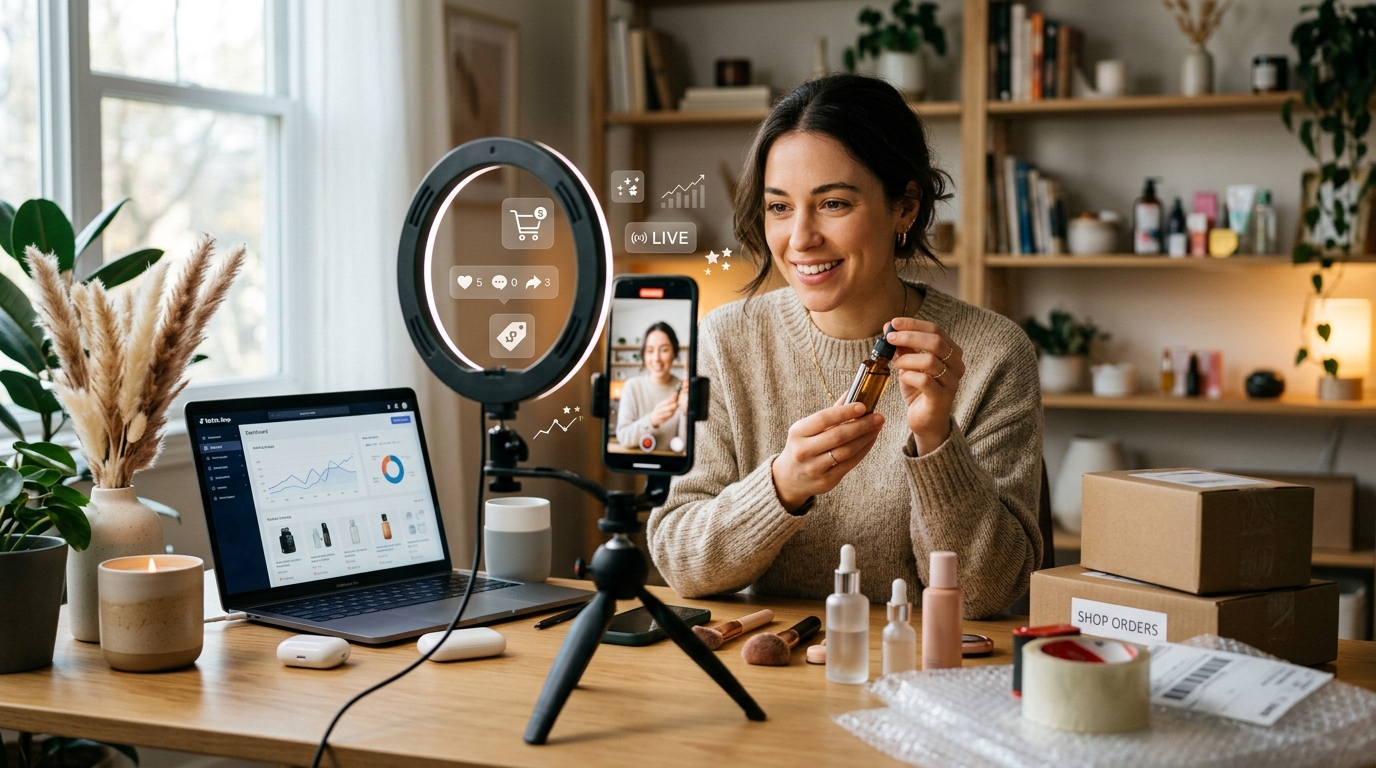
People used to open social media to watch videos, follow creators, laugh, learn something, or waste a few minutes between daily tasks.
Now something else is happening.
People are not only watching.
They are discovering products.
They are comparing opinions.
They are seeing demonstrations.
They are watching real people test items.
They are clicking product links.
They are buying without leaving the app.
That is why TikTok Shop matters.
It is not just another online store. It is part of a larger shift in how people shop online. Entertainment, product discovery, creator recommendations, short videos, live selling, reviews, and checkout are starting to merge into one experience.
For beginners, this can feel exciting.
It can also feel confusing.
Is TikTok Shop for sellers?
Is it for affiliates?
Is it for creators?
Is it only for people with a large audience?
Can small businesses use it?
Do you need inventory?
Do you need to show your face?
Do products sell because they are good, or because the video goes viral?
The answer is more interesting than a simple yes or no.
TikTok Shop can create opportunities for sellers, creators, affiliates, small businesses, and people learning digital commerce. But it is not magic. It is not a guaranteed income source. It is not enough to upload a product and wait for money to appear.
TikTok Shop works best when content makes people stop, watch, understand, trust, and want to take action.
In other words, the product matters.
But the video often matters just as much.
This is what makes TikTok Shop different from traditional ecommerce. On a normal online store, people usually search for a product first. On TikTok, many people discover products while they are watching content.
That changes everything.
What Is TikTok Shop?
TikTok Shop is an ecommerce feature inside TikTok that allows products to be sold through the platform.
Instead of sending people away to another website, TikTok Shop makes it possible for users to discover, click, and purchase products within the app experience.
Products can appear in different ways, depending on the country and available features. They may be connected to short videos, live streams, creator recommendations, product showcases, seller profiles, or shopping tabs.
The important idea is simple: content and commerce are connected.
A person can watch a video showing a product in use, become curious, click the product, and buy it without leaving the same digital environment.
This is powerful because it reduces friction.
In older ecommerce models, a buyer might see a post, visit a link, open a website, search for the product, compare options, create an account, and then decide whether to buy.
Every extra step creates a chance for the person to leave.
TikTok Shop shortens that journey.
The video creates attention.
The demonstration creates interest.
The product link creates action.
That does not mean every product sells easily. It means the platform is designed around product discovery and fast decisions.
For beginners, this is important to understand.
TikTok Shop is not only about listing products.
It is about creating content that makes the product feel useful, interesting, surprising, or desirable in a short amount of time.
Why TikTok Shop Became So Powerful
TikTok Shop became powerful because it combines three forces.
Short videos.
Algorithmic discovery.
Frictionless shopping.
Short videos are easy to consume. People can watch many of them quickly. A product can be demonstrated in seconds. A problem can be shown visually. A transformation can be revealed immediately.
Algorithmic discovery means a video does not always depend only on followers. A small creator or new seller may still reach people if the content performs well.
Frictionless shopping means the product can be connected directly to the content.
Together, these forces create a new form of ecommerce.
It is not only search-based commerce.
It is discovery-based commerce.
This is why a simple product can suddenly become popular when a video makes people curious.
A kitchen organizer.
A beauty tool.
A phone accessory.
A cleaning gadget.
A home decor item.
A small desk product.
A pet item.
A practical travel accessory.
If the product solves a visible problem and the video demonstrates it clearly, people may understand its value very quickly.
That speed is the heart of TikTok Shop.
But speed also creates risk.
Beginners can become excited by viral stories and forget the basics: product quality, delivery, customer support, pricing, margins, refunds, platform rules, and consistency.
A viral video may create attention.
A bad product can destroy trust.
Who Can Use TikTok Shop?
There are usually three main types of people or businesses involved in TikTok Shop.
Sellers.
Affiliates.
Creators.
A seller is a person or business offering products for sale. This may include small businesses, online stores, product brands, handmade sellers, importers, private-label sellers, or established companies.
An affiliate promotes products from sellers and may receive a commission when a sale happens through their content.
A creator may use TikTok Shop through product collaborations, affiliate content, brand partnerships, live selling, or by promoting their own products.
These roles can overlap.
A creator can also be a seller.
A seller can also create content.
An affiliate can grow into a product brand.
A small business can use creators to promote its products.
This is what makes social commerce interesting. It is not only one path.
A person with products can sell.
A person without products may promote other products as an affiliate, if eligible and allowed by the platform rules in their region.
A creator with an audience may monetize recommendations.
A business can combine product listings with short videos and live streams.
But eligibility, features, commissions, and rules can vary by country. TikTok Shop is not available everywhere in the same way. Before starting, beginners should always check the rules for their market, account type, product category, and local regulations.
Do not assume that a strategy working in one country will work exactly the same in another.
TikTok Shop Is Not Only for Big Influencers
One of the biggest myths is that TikTok Shop only works for large influencers.
Big creators can have advantages, of course. They may already have trust, audience attention, and experience creating videos.
But TikTok is different from many older platforms because discovery is not based only on follower count.
A small account can sometimes reach a large audience if the video keeps people watching.
This is why TikTok Shop can be interesting for beginners.
A new seller may not have a huge following, but they can create product demonstrations.
A small creator may not be famous, but they can make honest and useful videos.
An affiliate may not have a large brand, but they can focus on a specific niche and explain products clearly.
A local business may not know advanced ecommerce, but it can show real product use.
However, beginners should be careful not to confuse possibility with guarantee.
The fact that small accounts can grow does not mean every video will succeed.
Many videos will receive low views.
Some products will not perform.
Some hooks will fail.
Some audiences will not respond.
Some niches are too competitive.
TikTok Shop rewards testing, creativity, consistency, and adaptation.
It does not reward only uploading random products and hoping for miracles.
What Kind of Products Work Well on TikTok Shop?
Products that work well on TikTok Shop often share certain characteristics.
They are easy to demonstrate.
They create curiosity quickly.
They solve a visible problem.
They have a clear before-and-after effect.
They are visually interesting.
They can be explained in a few seconds.
They create an emotional reaction.
They feel useful, clever, satisfying, beautiful, surprising, or fun.
This is why certain categories often perform well on short-video commerce.
Home organization.
Beauty and skincare.
Kitchen tools.
Phone accessories.
Small gadgets.
Pet products.
Fitness items.
Decor products.
Desk setup items.
Cleaning tools.
DIY products.
Personalized gifts.
Lifestyle accessories.
Products that are hard to explain visually may need a different strategy.
For example, a complex product may not work well in a quick impulse video unless the creator knows how to simplify the benefit.
The best TikTok Shop products are not always the most expensive or most advanced.
Often, they are the easiest to understand.
A product that fixes a small daily irritation can perform very well if the video makes the problem feel relatable.
For example:
A drawer organizer that turns chaos into order.
A beauty product that shows a visible effect.
A kitchen tool that saves time.
A travel item that solves packing stress.
A phone accessory that makes filming easier.
A pet product that creates a cute reaction.
The product should create a moment.
Because on TikTok, moments sell attention.
The Real Secret: Content Sells Before the Product Sells
Traditional ecommerce often begins with a product page.
TikTok Shop begins with attention.
People usually do not open TikTok thinking, “I will carefully compare five products today.”
They open the app to be entertained, distracted, informed, or inspired.
So the first job of a TikTok Shop video is not to explain everything.
The first job is to make someone stop scrolling.
That is why content matters so much.
A product listing says, “Here is what this item is.”
A good TikTok video says, “Here is why you should care.”
The video can show the problem.
The frustration.
The surprise.
The transformation.
The result.
The use case.
The emotional moment.
For example, instead of saying:
“This is a kitchen organizer.”
A stronger video shows a messy cabinet, then the organizer creating a clean transformation.
Instead of saying:
“This is a phone stand.”
A stronger video shows how hard it is to film alone, then how the stand solves the problem.
Instead of saying:
“This is a skincare product.”
A stronger video shows texture, application, routine, and realistic use.
People buy when they understand the value quickly.
That does not mean you should exaggerate.
Misleading videos can damage trust, create returns, and hurt your reputation.
The best content is clear, interesting, and honest.
What Makes a TikTok Shop Video Sell?
Most videos that sell well follow a simple structure.
A strong hook.
A clear demonstration.
A reason to care.
A fast pace.
A natural tone.
A simple call to action.
The hook is the first few seconds.
It decides whether people keep watching.
Examples of hooks include:
“I did not expect this to be useful.”
“This fixed the most annoying part of my desk setup.”
“I bought this to test it, and now I understand why people like it.”
“This tiny product made my kitchen look less chaotic.”
“If your bathroom counter always looks messy, watch this.”
The demonstration should show the product in action.
People need to see it working.
Do not only hold the product.
Use it.
Test it.
Show the result.
Compare before and after.
Show the scale.
Show the texture.
Show the setup.
Show the problem it solves.
The reason to care explains why the product matters.
Does it save time?
Does it reduce mess?
Does it make something easier?
Does it create a better routine?
Does it look good?
Does it solve a common irritation?
The pace should be quick but not confusing.
TikTok viewers move fast.
A video that takes too long to reach the point may lose attention.
Finally, the tone should feel natural.
People are tired of old-style advertising.
A video that feels like a normal recommendation can sometimes work better than a video that looks like a commercial.
Do You Need to Show Your Face?
Not necessarily.
Showing your face can help build connection, especially for creators and personal brands.
But many TikTok Shop videos can work without faces.
Some videos show only the product.
Some show hands.
Some show packaging.
Some show before-and-after transformations.
Some show unboxing.
Some show a desk setup.
Some show a kitchen counter.
Some show a room transformation.
Some show product testing.
Some use voiceover.
Some use captions.
Some use satisfying visuals.
This is useful for beginners who are shy, private, or not ready to appear on camera.
However, faceless content still needs personality.
If you do not show your face, the video needs another source of interest.
Good lighting.
Clear demonstration.
Strong hook.
Good pacing.
Useful explanation.
Interesting angle.
Real product use.
Showing no face does not mean making boring content.
It means the product and story must carry the video.
TikTok Shop for Sellers
For sellers, TikTok Shop can be a way to connect products directly with content.
A seller may list products, manage orders, handle inventory, work with affiliates, create videos, run live selling sessions, and use product demonstrations to attract buyers.
This can be powerful for small businesses because content can create discovery.
A small product brand may not have the budget for traditional advertising, but it may still create videos that reach potential buyers.
However, sellers must think beyond content.
They also need operations.
Product quality.
Inventory control.
Packaging.
Shipping.
Customer service.
Returns.
Pricing.
Margins.
Platform rules.
Reviews.
A good video can bring buyers.
A bad operation can lose them.
This is where many beginners fail.
They focus only on viral videos and forget fulfillment.
If orders arrive and the seller cannot deliver properly, the business becomes stressful.
If customers receive low-quality items, reviews can damage future sales.
If margins are too low, growth can create losses instead of profit.
TikTok Shop sellers need both creativity and business discipline.
Content gets attention.
Operations protect the business.
TikTok Shop for Affiliates
For affiliates, TikTok Shop can be attractive because it may allow people to promote products without holding inventory.
Instead of manufacturing or shipping products, the affiliate creates content that helps sell products from sellers.
When a sale happens through the affiliate’s content, the affiliate may earn a commission, depending on the program rules.
This can be interesting for beginners because it reduces some barriers.
No warehouse.
No product development.
No packing.
No shipping.
But affiliate selling still requires skill.
You need to choose products carefully.
You need to understand the audience.
You need to create videos that build trust.
You need to avoid promoting low-quality items.
You need to disclose affiliate relationships when required.
You need to follow platform rules and local advertising guidelines.
The biggest mistake affiliates make is promoting anything just because the commission looks attractive.
That can destroy trust.
If people buy through your recommendation and feel disappointed, they may stop trusting your content.
A better affiliate strategy is to promote products that make sense for a specific niche.
For example:
Desk setup products for remote workers.
Kitchen organization products for small apartments.
Beauty tools for simple routines.
Pet products for cat or dog owners.
Travel accessories for people who pack light.
The more specific the audience, the easier it is to create useful content.
TikTok Shop for Creators
Creators can use TikTok Shop in several ways.
They can promote affiliate products.
They can partner with brands.
They can recommend products they use.
They can sell their own products.
They can create live shopping sessions.
They can build niche authority around product categories.
For creators, TikTok Shop turns influence into commerce.
But this creates responsibility.
A creator should be careful about what they promote.
Audience trust is not unlimited.
If every video becomes a sales pitch, followers may lose interest.
If products feel random, the creator’s brand becomes confusing.
If recommendations feel fake, trust disappears.
A strong creator-commerce strategy should feel aligned.
A fitness creator may promote fitness accessories.
A home organization creator may promote storage products.
A beauty creator may promote skincare or makeup.
A pet creator may promote pet items.
A productivity creator may promote desk tools or planners.
The product should make sense inside the content.
The best TikTok Shop creators often do not feel like traditional salespeople.
They feel like people demonstrating something useful, interesting, or relatable.
That is the difference.
TikTok Shop vs Dropshipping
Many beginners ask whether TikTok Shop is better than dropshipping.
They are different models.
Dropshipping usually depends on finding products, connecting suppliers, managing a store, driving traffic, handling customer service, and dealing with shipping times and product quality.
TikTok Shop depends heavily on content, product discovery, short videos, platform rules, and the ability to create attention inside TikTok.
Some sellers may combine elements of both, depending on their market and logistics.
But beginners should understand the difference.
Dropshipping often requires traffic strategy.
TikTok Shop often requires content strategy.
Dropshipping can struggle with long delivery times if suppliers are far away.
TikTok Shop customers may expect smoother in-app shopping and reliable fulfillment.
Dropshipping sellers may need to build trust from scratch through a website.
TikTok Shop sellers and affiliates can use TikTok content as the trust-building engine.
Neither model is automatically easy.
Both require product research, pricing, customer support, and honest marketing.
The danger is believing that a platform will solve everything.
It will not.
A weak product, poor delivery, bad service, or misleading content can fail on any platform.
Common Mistakes Beginners Make
Many beginners enter TikTok Shop with unrealistic expectations.
They see viral videos and imagine immediate results.
But the process is usually more complicated.
One common mistake is expecting every video to sell.
Most videos will not go viral.
That is normal.
Another mistake is choosing products with no visual appeal.
If a product cannot be demonstrated clearly, it may be harder to sell through short video.
Another mistake is making videos that look like old advertisements.
TikTok content usually works better when it feels native to the platform.
Another mistake is copying competitors without understanding why the original video worked.
A hook, angle, audience, timing, product, price, and creator style all affect performance.
Another mistake is ignoring customer service.
A seller may get sales, but poor support can damage reviews.
Another mistake is not calculating margins.
A product may sell well but still produce little profit if fees, shipping, returns, packaging, and discounts are not calculated.
Another mistake is promoting low-quality products as an affiliate.
That can damage trust.
Another mistake is quitting after a few videos.
TikTok Shop requires testing.
A beginner may need to try multiple hooks, formats, products, and angles before learning what works.
How to Start With TikTok Shop the Right Way
The best way to start is not by trying to sell everything.
Start with one niche.
A niche helps you focus.
Instead of selling random products, choose a category you can understand and demonstrate.
Examples include home organization, beauty tools, pet products, kitchen gadgets, desk setup, travel accessories, fitness items, small apartment solutions, or creative products.
Then study videos in that niche.
Do not copy blindly.
Observe.
What hooks do they use?
How quickly do they show the product?
What problem do they solve?
What visual moment creates curiosity?
What comments do people leave?
What objections appear?
What questions are repeated?
Next, choose products that are easy to demonstrate.
A beginner should avoid products that require too much explanation, have unclear quality, or create complicated customer expectations.
Then create simple videos.
A good starting format may include:
Problem.
Product demonstration.
Result.
Short explanation.
Call to action.
Post consistently.
Not every video will work.
Track performance.
Watch retention.
Study comments.
Improve your hooks.
Test different angles.
The goal is not to make one perfect video.
The goal is to learn what makes people stop and care.
Do You Need Money to Start?
It depends on your role.
A seller may need money for inventory, samples, packaging, shipping, tools, product photography, ads, or operations.
An affiliate may need less upfront money because they may promote products from sellers, depending on platform eligibility and rules.
A creator may need time, content skills, testing, and audience trust.
However, even if you do not need much money to begin, you still need effort.
A common mistake is thinking low startup cost means easy success.
It does not.
You still need to learn content creation, product selection, platform rules, audience behavior, and basic marketing.
You may also need simple equipment over time, such as lighting, tripod, background setup, editing tools, or sample products.
But you do not need a perfect studio.
Many effective product videos are simple.
Clean lighting.
Clear demonstration.
Good hook.
Useful product.
Natural explanation.
That is often enough to begin testing.
Why Product Choice Matters
Content can make a product visible.
But product choice still matters.
A bad product is hard to save.
Before promoting or selling an item, think carefully.
Is the product easy to understand?
Does it solve a real problem?
Can it be demonstrated in a short video?
Does it look good on camera?
Is the price reasonable for impulse buying?
Does it have good reviews or reliable quality?
Are shipping and delivery realistic?
Are returns likely?
Is the product safe?
Does it comply with platform rules?
Some products may seem exciting but create problems.
Fragile items.
Items with unclear sizing.
Products with quality issues.
Products that make exaggerated claims.
Products in regulated categories.
Products that may disappoint customers.
Beginners should be especially careful with products related to health, beauty claims, children, supplements, electronics, or anything requiring strong compliance.
A strong product strategy is not only about virality.
It is about trust.
Selling one product once is not the same as building a sustainable business.
The Role of Live Shopping
Live shopping is another important part of social commerce.
In live shopping, creators or sellers present products in real time while viewers watch, ask questions, and buy.
This format can be powerful because it creates urgency, interaction, and social proof.
A live seller can show product details, answer objections, demonstrate use, compare options, and respond to viewers immediately.
But live shopping is not easy.
It requires energy, preparation, product knowledge, audience interaction, and consistency.
A boring live session will not sell simply because it is live.
A good live session usually has structure.
Product order.
Demonstration plan.
Offers.
Answers to common questions.
Clear lighting.
Good audio.
Energy.
Trust.
For beginners, live shopping may feel intimidating.
That is normal.
You can start with short videos first, learn what products create interest, then move into live sessions when you feel more prepared.
Live selling is not only talking.
It is performance, service, and sales combined.
Trust Is the Real Currency
TikTok Shop may be built around fast content, but trust still matters.
People may buy quickly, but they also remember bad experiences.
If a product is misleading, trust drops.
If delivery fails, trust drops.
If the seller ignores messages, trust drops.
If the creator promotes anything for commission, trust drops.
If videos exaggerate results, trust drops.
That is why beginners should avoid fake urgency, fake reviews, false claims, and unrealistic promises.
Short-term hype can create sales.
Long-term trust creates a business.
A good TikTok Shop strategy should ask:
Would I recommend this product honestly?
Can the product deliver what the video suggests?
Is the buyer likely to feel satisfied?
Are the claims responsible?
Is the content clear?
Would I be comfortable answering questions about this?
This mindset separates serious sellers and creators from people chasing quick commissions.
The internet remembers trust.
And it also remembers disappointment.
Is TikTok Shop Worth Starting Now?
TikTok Shop may be worth studying because social commerce continues to grow, and consumer behavior is changing.
People are becoming more comfortable discovering products through short videos, creators, reviews, demonstrations, and live streams.
But that does not mean everyone should rush in blindly.
Competition is increasing.
Platform rules can change.
Fees can change.
Product trends can move quickly.
What works today may not work tomorrow.
The best beginners are not the ones who chase every trend.
They are the ones who learn the system behind the trend.
Attention.
Demonstration.
Trust.
Product-market fit.
Retention.
Customer service.
Operations.
Consistency.
If you understand these principles, TikTok Shop becomes more than a platform.
It becomes a way to understand modern ecommerce.
Even if features change, the lesson remains valuable: people buy when content makes a product feel relevant, useful, and trustworthy.
Final Thoughts
TikTok Shop is not just another selling tool.
It represents a shift in how people discover and buy products online.
Entertainment and shopping are becoming connected.
Short videos are becoming product demonstrations.
Creators are becoming distribution channels.
Small businesses are learning to sell through content.
Affiliates are turning recommendations into commerce.
And buyers are making decisions inside the same apps where they spend their attention.
For beginners, this creates opportunity.
But opportunity does not mean easy money.
TikTok Shop requires product research, content skills, consistency, honesty, customer service, pricing awareness, and platform understanding.
You do not need to start perfectly.
But you do need to start with the right mindset.
Do not think only like a seller.
Think like a content creator.
Do not think only about listing products.
Think about demonstrating value.
Do not think only about going viral.
Think about earning trust.
Because on TikTok Shop, the product matters.
The price matters.
The platform matters.
But the video is often what makes everything begin.
And in the new world of social commerce, the storefront is no longer only a website.
Sometimes, the storefront is a short video that makes someone stop scrolling.














Post Comment